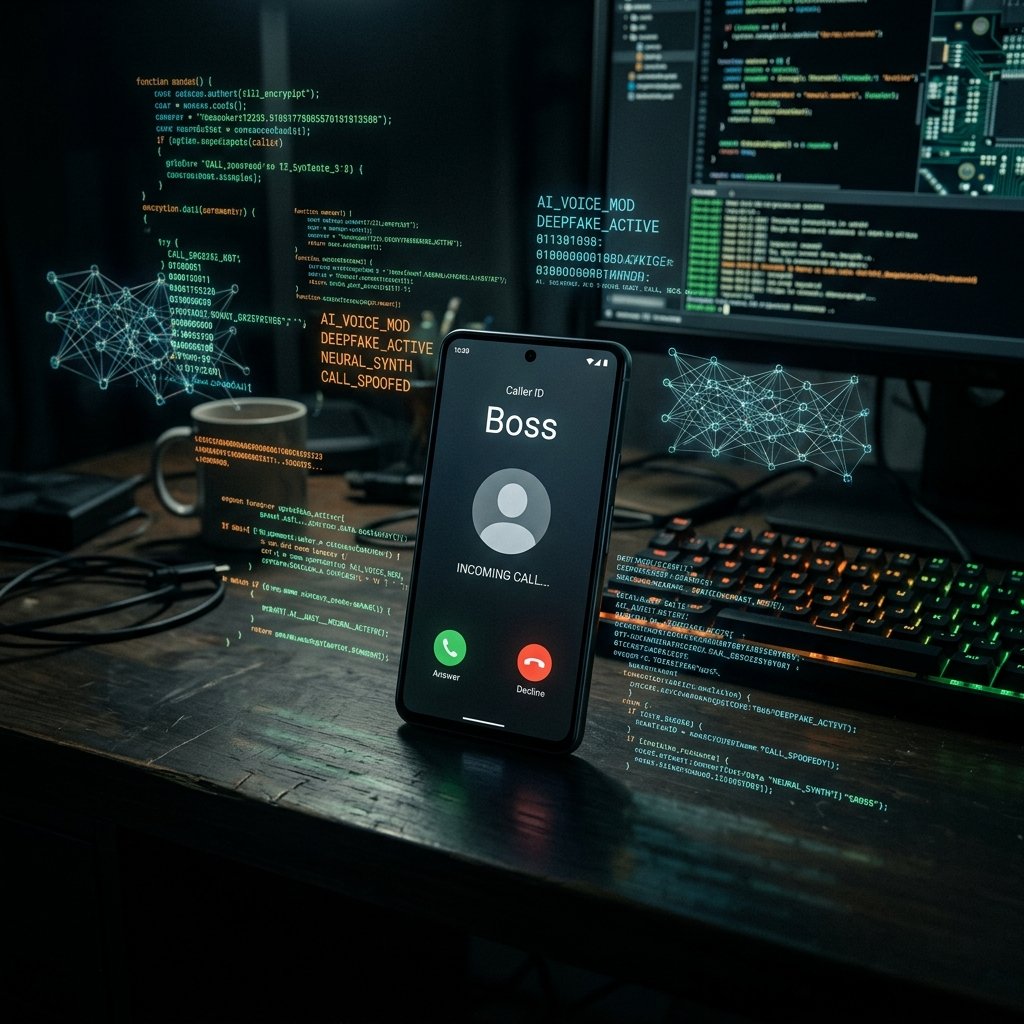
Imagine you are sitting at your desk on a Tuesday afternoon. Your iPhone lights up. The caller ID says it's your boss, or perhaps your spouse. You answer, and their voice on the other end is panicked, rushed, and asking you to wire funds immediately or send sensitive company data. The inflection, the breathing, the specific way they clear their throat—it's flawlessly them. You don't hesitate. You do exactly what they ask.
Except, they were on a flight with their phone in airplane mode. You were just talking to an algorithm.
Welcome to the terrifying new reality of cybercrime. We have officially crossed the threshold where artificial intelligence has turned digital fraud from a clumsy nuisance into a highly sophisticated, weaponized psychological attack. AI scams are becoming so hyper-realistic that they aren't just tricking the elderly or the technologically illiterate; they are actively fooling seasoned cybersecurity experts, bank executives, and tech-savvy digital natives.
If you have fallen victim to a deepfake fraud, a voice cloning scam, or an AI-generated phishing attack, you are not gullible. You were outgunned by billion-dollar, state-of-the-art technology. But when the dust settles, the panic sets in, and the money is gone, you need a way to fight back. You need to uncover the digital truth and build a rock-solid case.
That is exactly where MBHH, your premier iPhone & Android Forensics Specialist, steps into the light. We find the digital fingerprints the scammers thought they deleted.
The Evolution of Fraud: We Are Way Beyond the "Nigerian Prince"
For decades, we were trained to spot scams by looking for obvious red flags. We looked for misspelled words, bizarre grammar, blurry logos, and emails from exiled royalty promising millions of dollars. Our brains adapted to filter out the noise.
Generative AI has completely erased those red flags.
Today, cybercriminals use Large Language Models (LLMs) to draft flawless, highly persuasive spear-phishing emails tailored specifically to you. They scrape your LinkedIn to understand your corporate structure. They scrape your Instagram to see who your friends are. Then, they strike.
But text is only the beginning. The most devastating weapon in the modern scammer's arsenal is synthetic media: deepfake video and AI voice cloning.
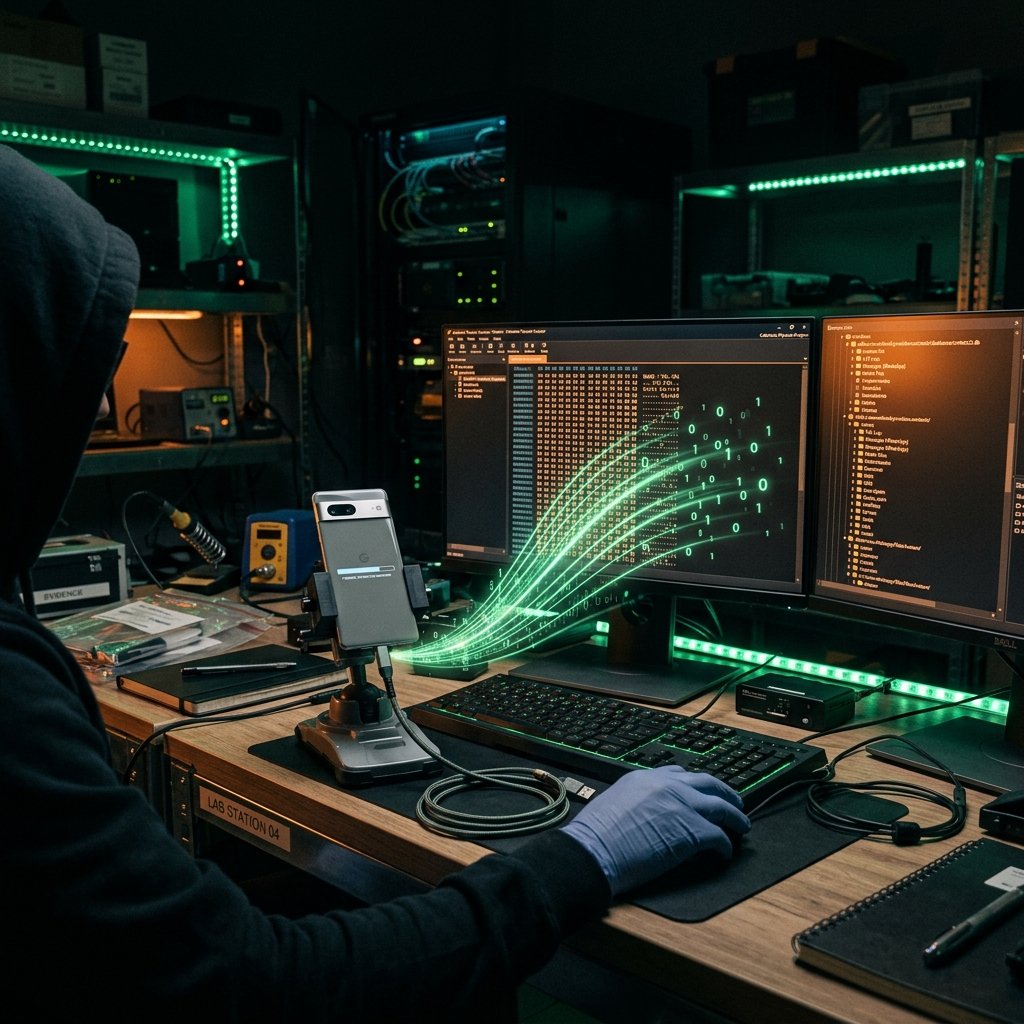
fig.1 — MBHH forensic extraction workstation: recovering hidden evidence from compromised mobile devices
In 2025 alone, Americans reported nearly $21 billion in cybercrime losses, with the FBI noting a massive surge specifically tied to artificial intelligence. Scammers only need a three-second audio clip—pulled from an old TikTok, a voicemail, or a YouTube video—to perfectly clone a human voice.
Why Your Brain is Hardwired to Believe the Lie
You might be thinking, "I work in tech; I would definitely spot a fake." The data says otherwise.
A finance worker at a multinational corporation joined a video conference. On screen were his CFO and several colleagues—all looking and sounding normal. Instructed by the "CFO," the worker transferred $26 million to an outside account. Every single person on that call—aside from himself—was a deepfake.
Why do experts fall for this? Because of cognitive hacking. AI doesn't just attack firewalls; it attacks human psychology. Our brains are biologically wired to trust what we see and hear. When you hear the distressed voice of a loved one, your amygdala triggers a fight-or-flight response. Adrenaline floods your system, critical thinking shuts down, and urgency takes over.
Furthermore, AI-driven attacks often deviate from normal patterns in incredibly subtle ways. A traditional hacker tries to brute-force a password. An AI scammer just calls the IT helpdesk, uses a deepfaked voice of the CEO, and sweetly asks for a password reset.
When the human element is compromised, traditional cybersecurity software is virtually useless. That is why post-incident investigation is more critical now than ever.
The Battleground in Your Pocket: iPhone and Android Vulnerabilities
While enterprise servers and corporate networks get all the media attention, the real battleground for your digital identity is sitting in your pocket right now. Your smartphone holds your banking apps, your crypto wallets, your private text messages, your emails, and your biometric data.
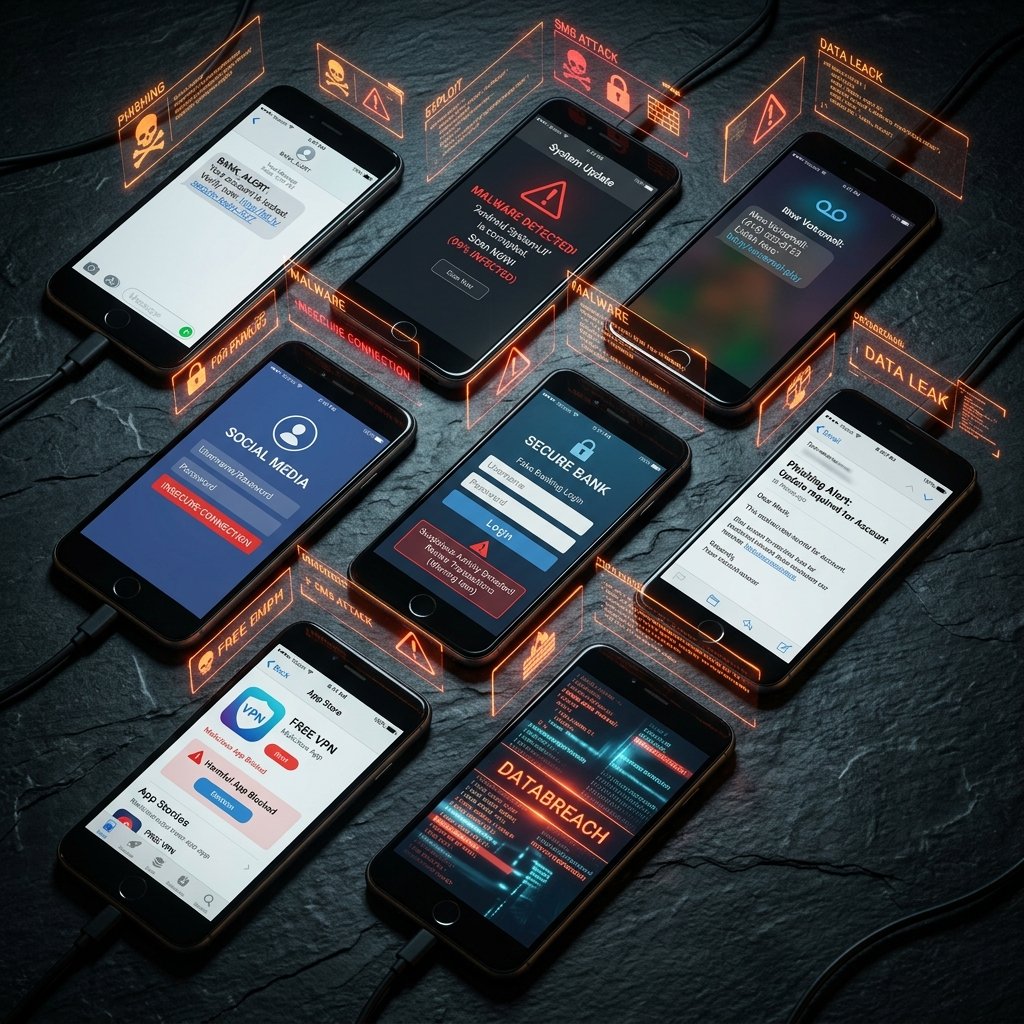
fig.2 — Common mobile attack vectors: smishing, deepfake voicemails, and malicious applications targeting iOS and Android
The Mobile Attack Vectors
Smishing (SMS Phishing)
AI-generated text messages that perfectly mimic alerts from your bank, the IRS, or a delivery service. They include links to flawlessly spoofed websites designed to harvest your credentials.
Deepfake Voicemails
You miss a call from an unknown number. The voicemail is your boss telling you to urgently review an attached file sent via email. You open the email on your phone, click the link, and silently install spyware.
Malicious Applications
AI is being used to rapidly write code for fake Android and iOS apps. These apps bypass initial security checks, masquerade as legitimate tools, and then harvest your keystrokes.
Apple and Google do a phenomenal job of securing their operating systems. iOS is famously "sandboxed," and Android has robust security protocols. However, the security of the device doesn't matter if the user is socially engineered into handing over the keys.
When a breach happens on a mobile device, the evidence is volatile. If you've been hit, every second counts.
The Digital Fire Department: How MBHH Steps In
As a specialized iPhone & Android Forensics Service, MBHH does not just fix broken screens or run basic antivirus scans. We are elite digital investigators. We extract, decode, and analyze the deeply hidden data within mobile devices to reconstruct exactly what happened, how it happened, and who is responsible.
What We Actually Do: The Science of Mobile Forensics
1. Logical vs. Physical Data Acquisition
Most local IT shops can only see what you can see on the screen. We go much deeper.
- A Logical Extraction pulls out the active data: your current texts, call logs, and app data.
- A Physical Extraction creates a bit-by-bit clone of the device's flash memory, bypassing OS limitations to access raw binary data.
2. Recovering the Unrecoverable
Did you panic and delete the WhatsApp thread where the scammer manipulated you? Smartphones rarely "delete" data immediately. Instead, the phone marks that space as available to be overwritten. Until new data overwrites it, the old data is still there, hidden in the shadows. MBHH specialists excel at carving out these deleted artifacts.
3. Tracing the Digital Fingerprints of AI
How do you prove in court that a voice note wasn't you, but an AI clone? We analyze the metadata—file headers, creation timestamps, EXIF data, and routing information. We look for anomalies in audio/video files that suggest synthetic generation—inconsistencies in compression, lack of natural background noise variance, or unnatural digital artifacts.
4. The Timeline Reconstruction
In cases of Business Email Compromise or complex identity theft, establishing a timeline is paramount. MBHH pieces together the exact chronological order of events—when the malicious text was received, when the link was clicked, when the unauthorized app was installed, and when data exfiltration began.
Why You Need a Specialist, Not a Generalist
If you needed heart surgery, you wouldn't go to a general practitioner. If your digital life has been compromised by an AI-driven attack, you cannot rely on a standard IT helpdesk.
Chain of Custody
All data we recover is maintained in forensically sound environments, ensuring admissibility in court.
RSMF Parsing
We present complex mobile chat logs—including emojis, deleted messages, and attachments—in clean, readable legal format.
Expert Testimony
MBHH specialists provide expert witness testimony, explaining complex digital forensic findings in plain English.
Proactive Defense: How to Spot the AI Scam Before It Strikes
fig.3 — Proactive defense: building digital resilience against AI-powered social engineering attacks
The "Oh No" Moment: What to Do If You've Been Compromised
It happens to the best of us. You clicked the link. You sent the money. You realize you have been talking to an AI phantom. Here is exactly what you need to do:
Step 1: Isolate, Don't Erase
Immediately turn on Airplane Mode. This severs the connection between the scammer and your device, stopping any ongoing data theft.
Step 2: Do NOT Delete the Evidence
Resist the urge to delete the text thread or the malicious app. Do not clear your browser history. You are deleting the very clues MBHH needs to track the perpetrators.
Step 3: Secure Accounts From Another Device
Use a clean computer or tablet to change your banking, email, and social media passwords immediately.
Step 4: Call MBHH
Contact our forensics team immediately. Every second the device sits unattended, volatile evidence can degrade.
Uncover the Truth with MBHH
AI has given scammers a massive advantage, allowing them to operate with unprecedented realism and scale. They are betting on your panic. They are relying on the fact that their digital footprints will be too complex for the average person to trace. They are wrong.
At MBHH, we strip away the illusions of AI to find the hard, binary truth. We specialize in turning compromised iPhones and Androids into goldmines of digital evidence.